
Identifying Subterranean Termite Activity in Lake Ridge Crawl Spaces and Foundations
Learn how to spot the early warning signs of subterranean termites in Lake Ridge crawl spaces and foundations, from mud tubes to damaged sill plates.
The Hidden Threat to Lake Ridge Homes
In Lake Ridge, Virginia, lush tree canopies, proximity to the Occoquan River, and rolling topography provide a scenic setting for homeowners. However, these same environmental features create prime conditions for subterranean termites. Termites thrive in damp, undisturbed environments, and few areas of a home are as vulnerable as the foundation and the crawl space beneath it.
Subterranean termites, primarily the eastern subterranean termite (Reticulitermes flavipes), live in large underground colonies. Unlike pests that leave obvious trails across kitchen counters, termites operate out of sight. They feed on cellulose, the structural building block of the wood that supports your subfloors, walls, and roof. By the time visual cues appear on finished living areas, an infestation in the crawl space or along the foundation may have been progressing for months or even years. Understanding how to inspect these hidden zones is a vital part of protecting your property investment.
Why Foundations and Crawl Spaces in Lake Ridge Are Vulnerable
Lake Ridge experiences warm, humid summers and cool, wet winters. The local soils—often heavy with Virginia clay—tend to hold moisture rather than drain quickly. When water collects around masonry or beneath a home, crawl spaces can retain elevated relative humidity levels for extended periods.
Subterranean termites require continuous moisture to survive; their soft bodies desiccate quickly when exposed to open, dry air. Crawl spaces offer ideal conditions: shelter from sunlight, direct access to soil, damp foundation walls, and easy access to structural framing components like sill plates, band joists, and subflooring.
Common architectural and landscape features throughout Lake Ridge that increase vulnerability include:
- Wood-to-Ground Contact: Wooden deck posts, crawl space door frames, or siding touching the soil give termites a direct, unexposed bridge into the home.
- Heavy Mulching: Wood mulch spread against exterior foundation walls traps moisture and insulates termite foraging tunnels.
- Poor Grading: Downspouts and negative grading that channel rainwater toward the foundation rather than away from it keep the perimeter constantly wet.
- Inadequate Crawl Space Ventilation: Unsealed vents or improperly installed vapor barriers lead to high humidity and condensation on wooden joists.
Key Signs of Subterranean Termite Activity
Because subterranean termites avoid open air, you will rarely see the insects themselves marching across your crawl space. Instead, you must look for the evidence they leave behind as they move between the soil and structural lumber.
1. Mud Shelter Tubes
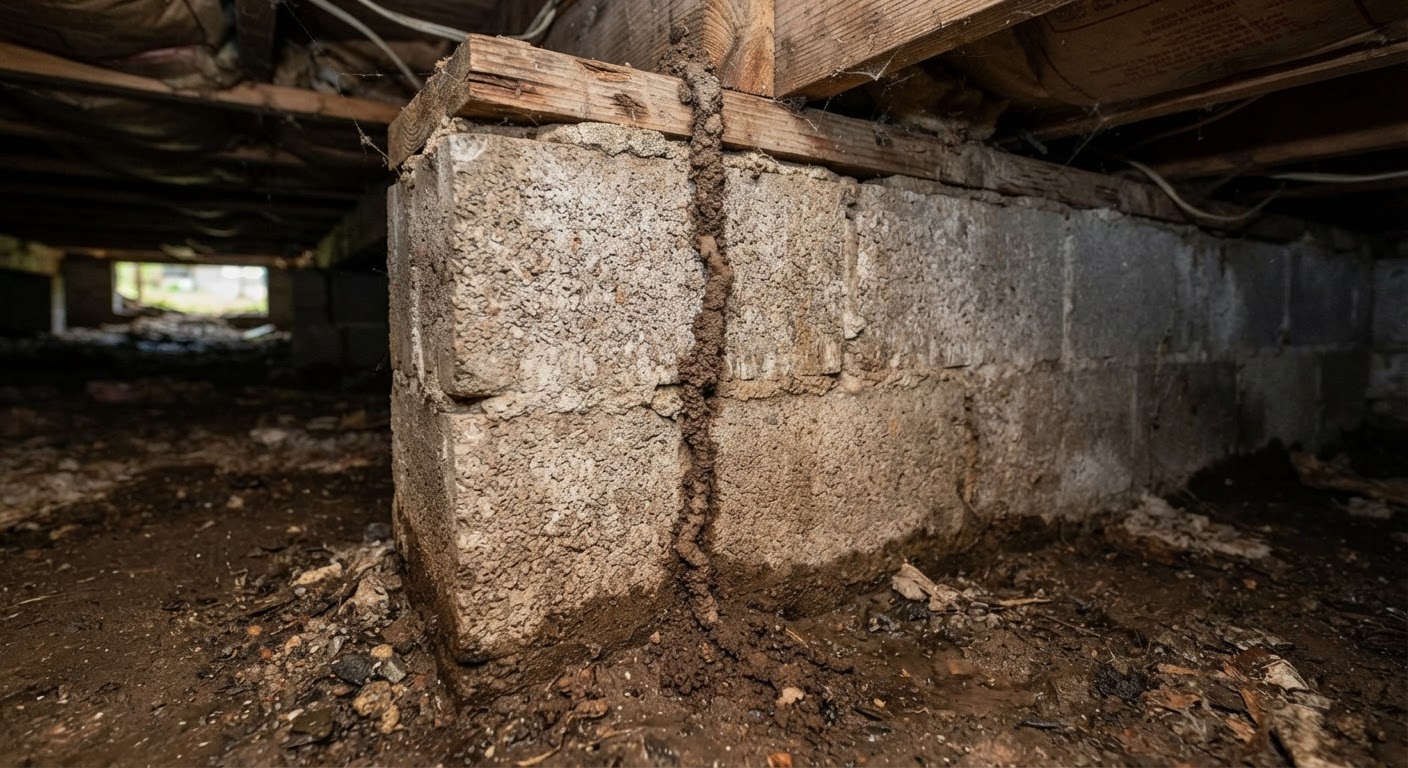
The most definitive sign of subterranean termite presence is the mud tube (also called a shelter tube). These narrow tunnels, typically between a pencil and a coin in width, are built using a mixture of soil, digested wood, and saliva. Termites construct them across exposed masonry, concrete footers, metal ductwork, and foundation piers to travel between their underground nest and structural wood without drying out.
Look closely at:
- Poured concrete and cinder block walls
- Support piers and lally columns
- Crawl space rim joists and sill plates
- Plumbing penetrations entering the soil
If you encounter a mud tube, cracking open a small section can provide clues about current activity. If termites emerge to repair the breach or you see pale worker termites moving inside, the tube is active. However, an empty tube does not mean your home is safe; colonies frequently abandon and re-enter pathways depending on seasonal temperatures.
2. Damaged or Spongy Wood
Subterranean termites feed from the inside out, following the softer springwood grain and leaving the harder summerwood intact, along with a thin exterior veneer of paint or timber. This feeding pattern creates a distinct layered or honeycomb appearance inside damaged boards.
In the crawl space, pay close attention to the sill plate (the lowest horizontal wood member sitting directly atop the masonry foundation). Gently tap or press sill plates and floor joists using the handle of a screwdriver. Sound wood produces a solid, firm thud. Wood excavated by termites will sound hollow or may depress easily under moderate thumb pressure. In severe cases, the surface wood crumbles, revealing tunnels packed with dirt and debris.
3. Discarded Swarmer Wings
In spring, mature colonies produce winged reproductive termites called swarmers (alates). Their sole purpose is to emerge, mate, shed their wings, and locate damp soil to establish a new colony. Swarmers are weak fliers and are attracted to light.
Around your Lake Ridge foundation and inside crawl spaces, you may not catch the swarm itself, but you will often find piles of dropped wings. These translucent, smoky wings are approximately one-quarter to one-third of an inch long. Look for them clustered on crawl space access ledges, around exterior foundation vents, on basement window sills, and in spider webs near the ground.
4. Soil Packing in Cracks and Seams
Unlike drywood termites, which produce distinct sand-like fecal pellets, subterranean termites seal their tunnels, gaps in joists, and hairline foundation fractures with moist soil. If you notice mud or earth packed into wood joints, foundation mortar gaps, or around plumbing cutouts where dirt should not naturally occur, termites are likely using those voids as transit corridors.
Distinguishing Termite Damage from Wood Rot
Given the high humidity common in Lake Ridge crawl spaces, fungal decay (wood rot) is frequently present alongside or mistaken for termite activity. Knowing the difference helps determine the proper remediation strategy:
- Wood Rot: Rot occurs when airborne fungi attack damp wood. Brown rot causes wood to shrink, darken, and break into small, cubical chunks (often referred to as cubical rot). White rot leaves timber soft, spongy, and stringy. Rot does not contain dirt-packed tunnels or shelter tubes.
- Termite Damage: Termite galleries run along the wood grain and contain gritty soil residue, termite droppings, and mud seals. However, because termites prefer wood softened by moisture, rot and termite infestations often coexist in the same foundation members.
Action Steps for Lake Ridge Homeowners
Inspecting a crawl space requires a strong flashlight, protective clothing, and a probing tool. Examine the entire perimeter of your foundation, both inside the crawl space and along the exterior grade. Ensure there is a visible inspection gap of at least six inches between the soil and the bottom edge of your exterior siding.
If you find shelter tubes, hollow wood, or discarded wings, avoid using over-the-counter surface bug sprays in an attempt to handle the problem yourself. Surface repellents merely scatter worker termites to other untreated areas of your framing without affecting the subterranean colony beneath the ground.
Protect Your Foundation with Bugzera Pest Control
Defending your home against subterranean termites requires targeted, professional assessment and proven elimination methods. Bugzera Pest Control provides thorough crawl space and foundation inspections throughout Lake Ridge, identifying subtle signs of termite activity before minor structural issues turn into costly repairs. Contact Bugzera Pest Control today to schedule your comprehensive termite inspection and secure your property from the ground up.
Need help from Bugzera Pest Control?
Contact our team to discuss your service needs in Lake Ridge and surrounding service areas.