
Summer Mosquito Management Near the Occoquan Reservoir: Practical Ways to Clear Backyard Breeding Grounds
Living near the Occoquan Reservoir offers scenic beauty, but summer heat and wooded moisture create prime mosquito breeding conditions. Learn how to locate hidden water sources and protect your Lake Ridge backyard.
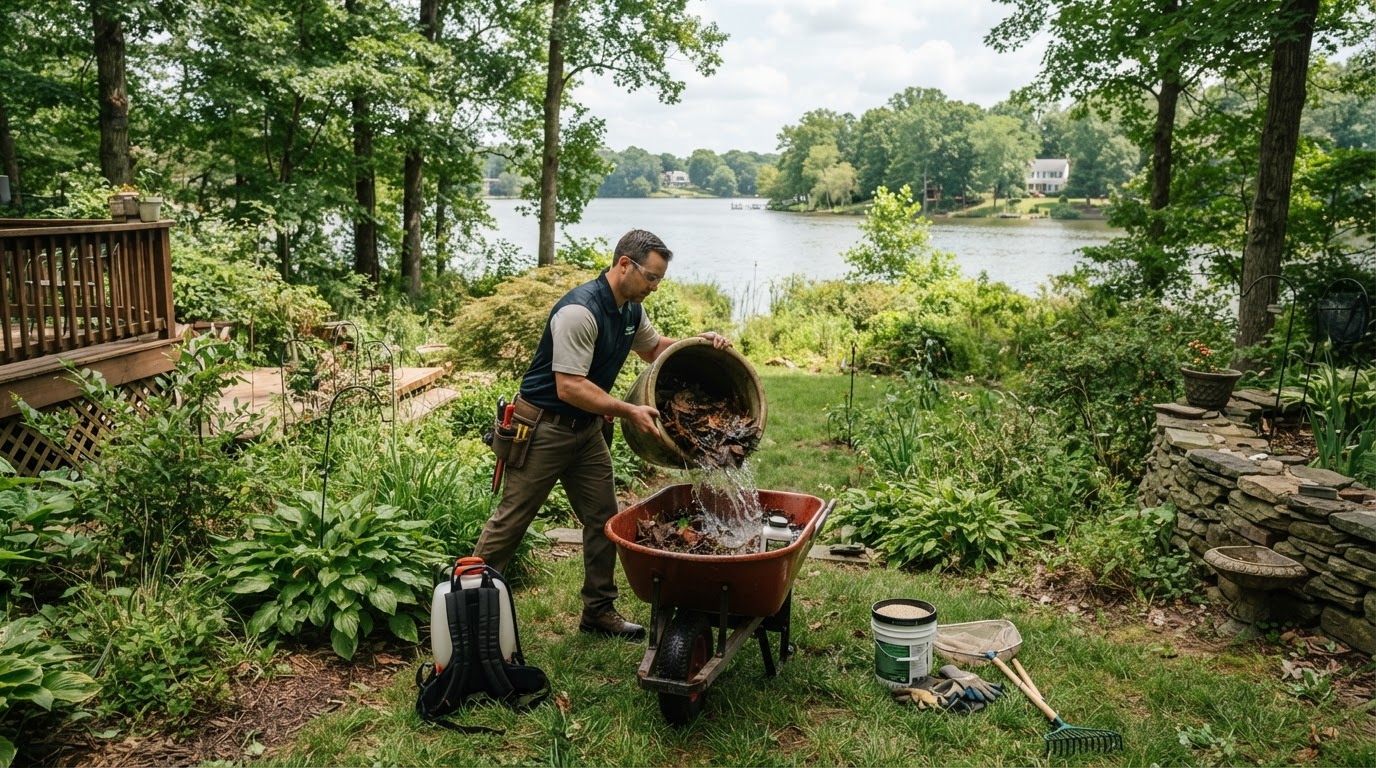
The Challenge of Summer Mosquitoes Along the Occoquan Reservoir
Lake Ridge homeowners enjoy some of the most picturesque natural surroundings in Northern Virginia. With mature hardwood canopies, rolling hills, and easy access to the Occoquan Reservoir, the local environment provides a welcome retreat from urban congestion. However, those same environmental features make the area particularly hospitable to mosquitoes once mid-Atlantic summer temperatures arrive.
Mosquitoes thrive in warm, humid conditions where standing water and shaded vegetation are abundant. While many people assume that the reservoir itself is the primary source of biting mosquitoes in their yards, the reality is often much closer to home. Large, moving bodies of water like the Occoquan Reservoir typically support natural predators, including fish, dragonflies, and aquatic insects, which feed heavily on mosquito larvae. In contrast, residential backyards offer undisturbed, predator-free microclimates where a single cup of stagnant rainwater can produce hundreds of adult mosquitoes in little more than a week.
Understanding the Mosquito Life Cycle in Northern Virginia
To reduce mosquito numbers effectively, it helps to understand how quickly these insects develop during typical Lake Ridge summer conditions. Mosquitoes undergo four distinct stages: egg, larva, pupa, and adult. The first three stages require standing water.
During hot summer weeks, when temperatures consistently exceed 80 degrees Fahrenheit, the transition from egg to biting adult can take as little as seven to ten days. Female mosquitoes seek out stagnant water that will remain still long enough for their larvae to feed and develop. Common species in our region, such as the invasive Asian tiger mosquito, are aggressive daytime biters that prefer artificial containers over natural ponds. Because they rarely fly far from where they hatch, an influx of aggressive daytime biters on your deck or patio almost always indicates a breeding source within your immediate yard or an adjacent property.
Common and Hidden Backyard Breeding Sites in Lake Ridge
Given the wooded terrain and sloping properties common throughout Lake Ridge, water collects in places that often go unnoticed during routine lawn maintenance. Systematically checking and eliminating these hidden breeding sites is the cornerstone of effective mosquito reduction.
Corrugated Downspout Extensions
Many homes in the community rely on flexible, corrugated plastic pipes to carry rainwater away from foundations and down sloped yards. While practical for drainage, the ridges inside these pipes trap small pools of water after every summer rain shower. Because these trapped pools are dark and shielded from predators, they serve as ideal nurseries for mosquito larvae. To address this, swap corrugated extensions for smooth PVC pipes where possible, or elevate the flexible pipe so gravity forces all water out completely.
Clogged or Sagging Gutters
The thick canopy of oak, tulip poplar, and pine trees that defines Lake Ridge drops heavy debris throughout the spring and early summer, including seed pods, blossoms, and leaves. When gutters become clogged, summer rain cannot drain properly, leaving stagnant troughs high above the ground. Even gutters fitted with surface guards can hold water if they sag or gather silt along the edges. Cleaning gutters regularly ensures water drains freely into the downspouts.
Tarp Folds and Boat Covers
Because of our proximity to the Occoquan Reservoir, many local residents store kayaks, canoes, stand-up paddleboards, and trailered boats in their driveways or backyards. Protective tarps and canvas covers inevitably develop low spots where rainwater collects. A shallow depression in a blue tarp holding an inch of water can sustain dozens of developing larvae. Store watercraft upside down when possible, and pull tarps taut to prevent water from pooling.
Outdoor Play Equipment and Yard Accents
Children's swing sets, plastic playhouses, tire swings, and wagons frequently collect water in unexpected seams and recesses. Tire swings are particularly problematic because water pools inside the bottom rim and cannot easily evaporate. Drilling small drainage holes in the lowest point of a tire swing or play structure allows collected rainwater to escape naturally.
Birdbaths, Plant Saucers, and Pet Dishes
Decorative elements in outdoor living spaces require consistent upkeep during mosquito season. Plant saucers beneath potted flowers retain runoff, creating prime breeding habitat just feet away from your outdoor seating areas. Birdbaths add beauty to a garden but should be flushed and refilled with fresh water every three to four days to disrupt the egg-laying cycle before larvae can mature.
Managing Shaded Resting Sites on Wooded Lots
Eliminating standing water addresses future generations of mosquitoes, but managing adult mosquitoes requires looking at the landscape itself. Mosquitoes are susceptible to dehydration during the heat of the day. To survive, adults seek cool, damp, shaded areas until humidity rises in the morning and evening.
In Lake Ridge, dense landscape beds, unmanaged brush piles, and low-hanging tree branches provide ample daytime shelter. You can make your yard far less inviting to adult mosquitoes through thoughtful property maintenance:
- Thin out dense groundcover: Thick ivy, pachysandra, and heavy hosta plantings hold humidity close to the soil. Thinning these beds promotes air circulation, drying out the microclimate.
- Trim overgrown shrubs: Keep shrubs and ornamental trees pruned away from home foundations, walkways, and patio edges to maximize airflow and sunlight.
- Manage the woodline: If your property borders a wooded ravine or greenbelt, keep tall weeds and volunteer saplings cleared back from your primary recreation areas to create a dry, open buffer zone.
- Mow regularly: Keep turfgrass trimmed to a standard healthy height. Overgrown grass holds dew longer into the morning, giving mosquitoes extended resting opportunities.
A Weekly Routine for Lake Ridge Homeowners
Consistency is vital for long-term mosquito control. Because larvae develop rapidly, performing a quick weekly inspection will interrupt their reproductive cycle before a new generation emerges. Set a regular day each week to complete the following five-minute checklist:
- Empty and rinse birdbaths, pet bowls, and decorative fountains.
- Dump collected rainwater from flowerpot saucers, wheelbarrows, and garden buckets.
- Inspect corrugated downspout ends and adjust them so they drain dry.
- Shake out gathered water from outdoor furniture covers, grill covers, and tarps.
- Walk the perimeter to collect fallen branches, bottles, cans, or stray toys that hold water.
Professional Barrier and Larvicide Solutions
While proactive yard maintenance drastically cuts down mosquito numbers, properties that directly border community green spaces, stream valleys, or the Occoquan Reservoir face constant pest pressure from untreatable adjacent lands. In these situations, combining homeowner habitat reduction with professional mosquito management yields the best protection.
Professional services target the specific microclimates where adult mosquitoes rest during the day. By treating the undersides of broad foliage, shaded brush lines, and structural overhangs, barrier treatments substantially reduce adult mosquito activity without disturbing surrounding ecosystems. Additionally, applying targeted biological larvicides to drainage catch basins or permanent decorative water fixtures stops larvae from developing without harming birds, pets, or beneficial pollinators.
Enjoy Your Lake Ridge Backyard This Summer
You should not have to retreat indoors during the best months of the year. By understanding the mosquito life cycle, identifying hidden water reservoirs around your property, and keeping shaded resting zones under control, you can reclaim your outdoor living spaces. If heavy wooded cover or nearby drainage areas make mosquito control challenging on your property, the team at Bugzera Pest Control is here to help with targeted, seasonal mosquito treatments designed for Lake Ridge homes.
Need help from Bugzera Pest Control?
Contact our team to discuss your service needs in Lake Ridge and surrounding service areas.